
Leland Address-Era Records
The best source changes with the date of the question. Brunswick County's current property information can establish the parcel and its legal description. The Register of Deeds then supplies the ownership trail, although the online period has a stated beginning and earlier indexes need a separate route. Directories and censuses can add a household layer, while permits, newspapers, probate, and historical collections help test a date or name. Those sources answer different questions, so keep ownership, occupancy, and a mention in a notice separate in your notes.
| Source | Years it covers | Where held | What it shows |
|---|---|---|---|
| Brunswick ROD current index and images | September 1939-present, stated by county | Combined Real Property/MAPS portal | Grantor, grantee, document type, date, book and page, with image access to verify by result. |
| ROD legacy index PDFs | 1932-1953 | ROD guide and office | Alphabetical grantor and grantee indexes that lead to a book and page. |
| Older legacy route | 1764-1931 menu in older guide | ROD, office, or Archives follow-up | A possible early index or book trail; current image and access mechanics are unverified. |
| County directories | 1867-68 through 1896 Society references; 1905 and 1906 DigitalNC | Historical Society, DigitalNC, UNC collection | Business, post-office, community, and trade clues, not a confirmed address reverse run. |
| Federal census | 1790-1950 publicly available | NARA, Census, HeritageQuest, or Ancestry at the library | Household and place details that must be matched to the right geography. |
| County permit reports | April 2018-December 2019 archived; January 2020 forward reports | Brunswick County Permit Reports | Address and project clues, subject to revisions, voids, and expirations. |
A recent transfer normally begins with the parcel and deed chain. For a much older name, start with the directory or census era that fits the family story, then return to the legal description and deed references. The tools work best as a chain, not as a single answer.
Leland Parcel Records Start Here
The Brunswick County Tax Office property search and the county's property-card entry point are the current starting points for an address. County systems advertise owner name, situs address, and parcel-number routes. Save the current situs address, parcel ID, owner name, mailing address, legal description, subdivision or lot and block, and any stated revaluation year. A situs address is the parcel location. A mailing address is an administrative contact address. Neither one alone proves who lived there at a particular time.
Parcel ID is a useful administrative key, and the legal description is often the stronger bridge to older records. Brunswick GIS help identifies parcel information, owner information, legal description, parcel or tax-card details, and map zoom or print tools. It also says the data is compiled from deeds, plats, and public records and is not a legal survey. When the map and a recorded instrument differ, rely on the recorded deed and ask the custodian about the discrepancy.
Note: Write down the legal description before comparing historical material, because a street number can change while a lot, block, or metes-and-bounds description remains traceable.
Leland Deed Chains for Past Residents
A deed chain starts with the current owner and works backward through recorded transfers. In the index, the person receiving an interest is the grantee, while the person transferring it is the grantor. Find the current owner's acquisition as a grantee, then read the instrument for the earlier seller, recording date, book and page, legal description, and any prior instrument reference. Search that seller as a grantee in an earlier period, then repeat. A transfer date documents a filing or transaction, not a guaranteed move-in date or a full list of people who were present.
- Use the property record to capture the current parcel ID and legal description.
- Search the current owner as grantee in the ROD Combined Real Property/MAPS index.
- Open the matching deed and record its grantor, date, book and page, and any prior reference.
- Search that grantor as a grantee in an earlier date range, using name variants when needed.
- Repeat backward, then move to legacy books or a custodian request when the web index no longer covers the era.
- Grantor and grantee
- The grantor transfers an interest; the grantee receives it.
- Chain of title
- The sequence of recorded transfers traced backward through the same property identity.
- Legal description
- The lot, block, subdivision, or metes-and-bounds wording that identifies land beyond a street label.
Use the Brunswick County Combined Real Property/MAPS recorder index as the source for this Leland deed-chain image.
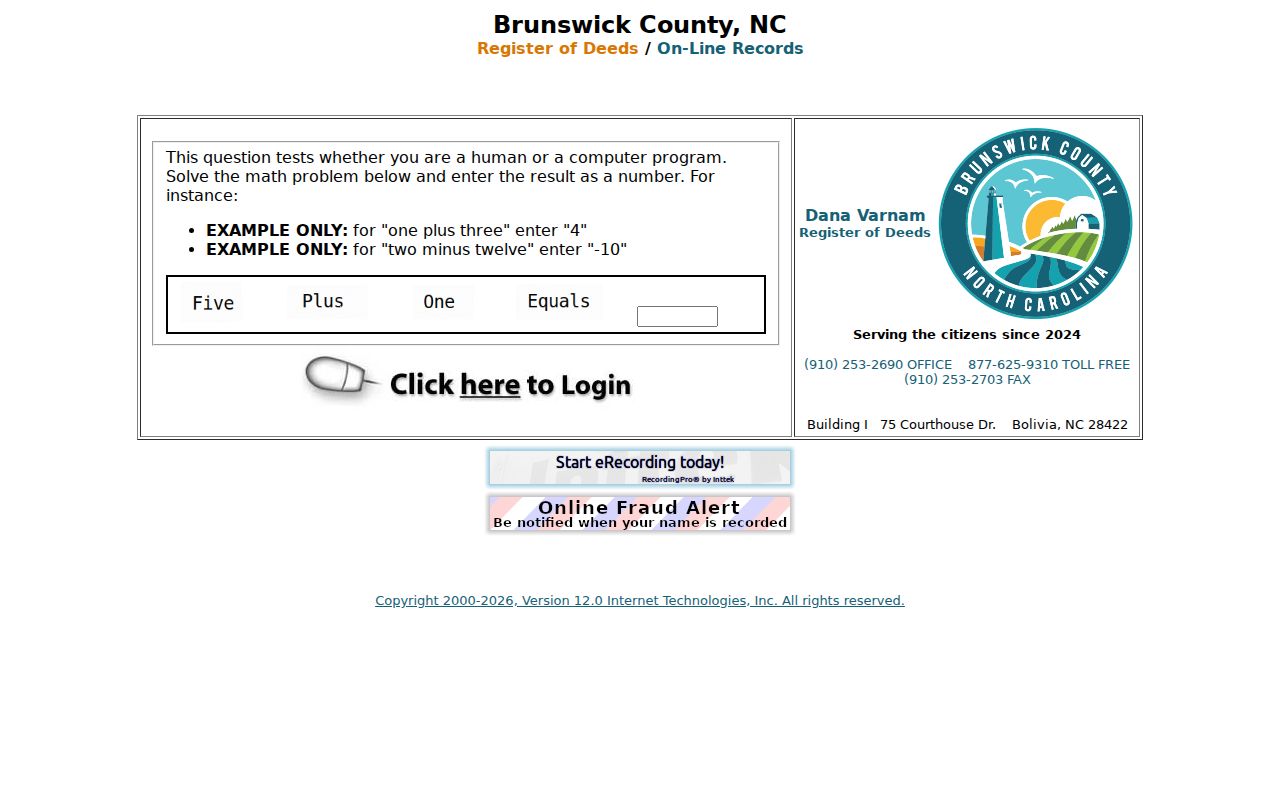
The index is the handoff between a current parcel and the recorded documents that can reveal prior transfer links.
Leland's 1939 Digital Records Line
Myth: every older Leland deed can be read through the current web index. The county states that online recordings run from September 1939 to the present. Separate legacy grantor and grantee PDFs cover 1932 through 1953. An older guide displays a 1764-1931 legacy-index menu, but the research did not verify which early books are imaged, searchable, microfilmed, or available only through an office or Archives request. Do not describe the pre-1932 route as complete digital access.
When the online trail stops, use the Brunswick Register of Deeds office, its legacy index materials, and the State Archives county-record channel. Give the custodian a book and page when you have it, or a narrowed name, date range, property description, and document type when you do not. North Carolina Public Records Law, Chapter 132, supports inspection and copying of public records subject to record-specific limits, but it does not require an agency to create a new historical compilation.
Insider tip: A precise parcel, book and page, or narrow deed range is more likely to produce a useful older-record response than a request for everything connected to an address.
Leland Address History Records
Leland's record identity changed from a late-1890s railroad and post-office settlement to an incorporated town in 1989. Old records may be under Brunswick County, a Leland post office, or a nearby township. No official street-renumbering or road-renaming year was found. That is why the parcel geometry, subdivision plat, legal description, deed book and page, and post-office name carry more weight than an attempt to match an early line to a current street number.
Plats can identify a subdivision lot and block. A metes-and-bounds description identifies land by measured calls and landmarks. Either can bridge a change in street naming or municipal status. The county GIS viewer also offers parcel, road, municipality, postal, flood, zoning, school, voter, and district layers, but its map is not a legal survey. Use it to find a record path, then confirm the land identity in the recorded instrument.
Leland Previous Residents in Directory Traces
Historical books can add context after the deed chain identifies a name or time period. Brunswick County Historical Society references include business directories for 1867-68, 1869, 1877-78, 1883-84, and 1896. DigitalNC cataloged North Carolina city and business directory items for 1905 and 1906. These sources can show a name, post office, trade, or business link, but the inspected 1906 sample is not a household-style street directory and has no confirmed reverse or criss-cross section.
See the Leland city directories collection for the catalog, shelf, and entry-reading details. For an address trail, carry the legal description and date into that historical work. A person named in a county business line may be associated with a community without being tied to the exact parcel being researched.
The DigitalNC 1906 directory catalog record leads into this Leland historical-directory image.
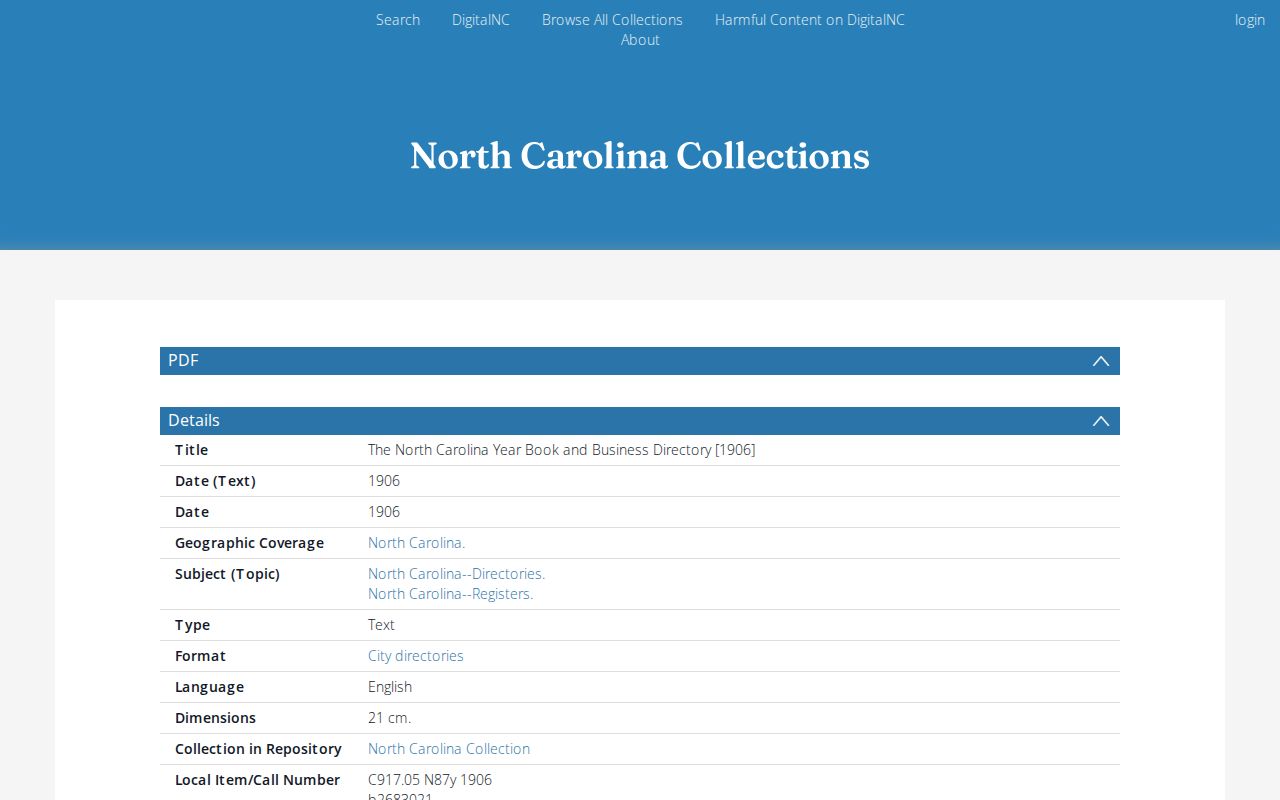
Its Leland post-office reference can guide a historical place search, but deeds and census records are needed to test a household or parcel connection.
Leland Census Records for Past Residents
Pairing directory and census years can turn a name clue into a stronger household trail. The research identifies public federal census access from 1790 through 1950, with the 72-year release rule explaining why newer decennial schedules are not yet public. Search a known name with spelling variants, initials, occupation, post office, and county context. The census may supply household, age, relationship, and place details, but the geographic labels can differ from current Leland boundaries.
The library route also reaches the Brunswick Beacon through NewsBank and adds DigitalNC material from 1985 through 1994. An obituary, marriage notice, civic notice, or land-project mention can help place a name in time. Check an obituary's date and stated relationship, then compare it with probate, deed, or cemetery material. A notice is a clue, not a statement that a surviving relative still lives at the old address.
The Brunswick County Library online genealogy resources are the source for this Leland library research image.
The database and reference-desk route joins newspaper, census, map, and historical-record research without claiming that one database proves an address history.
Leland's Early Records Fallback
When an early deed or directory clue ends, the Brunswick County Historical Society and State Archives provide the next research channels. The Society reports family histories, local histories, Bible, cemetery, obituary, church, loose-paper, map, vital, deed, tax, court, military, diary, and oral-history material. Statewide birth and death registration began October 1, 1913, so Bible, church, newspaper, probate, and cemetery material can be important for an earlier family trail. None of those sources should be treated as a direct substitute for a certified civil record.
The Brunswick County Historical Society newsletter archive is the source for this Leland historical-holdings image.
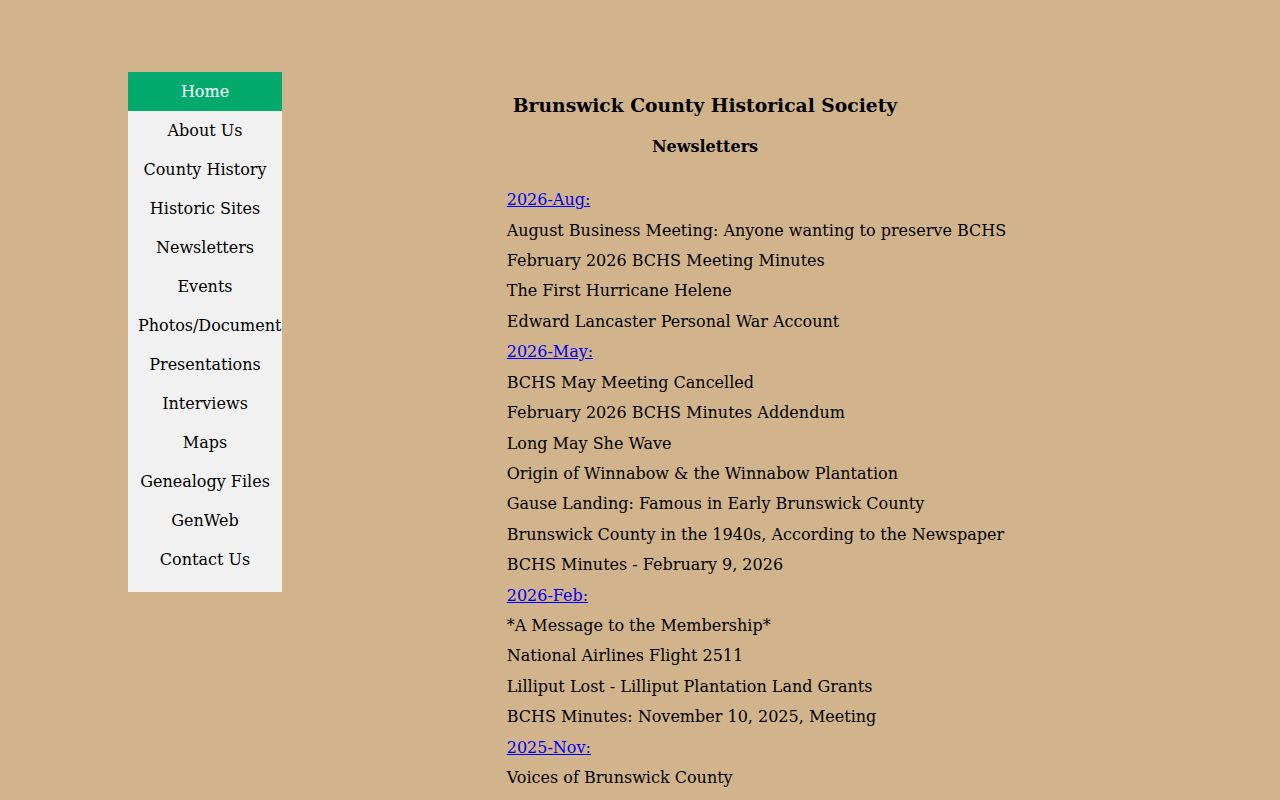
The listed categories point to possible supporting evidence, while exact room hours, appointment rules, reproduction fees, and a complete finding aid remain unverified.
The State Archives county-records guide covers older county groups such as deeds, estates, wills, court, tax, marriage, military, and Bible records. Send a specific request through the official Archives route with Brunswick County, the narrow time period, and the strongest known identifier. That preserves a realistic record trail when a web search cannot reach the earlier book.
Use Leland Address Records Responsibly
Past-resident research is best used for family history, estate and heir work, preserving a building's story, civic curiosity, or checking a record for a scam. It is not a reason to track, contact, or expose a living person. An ownership record, mailing address, permit name, or obituary does not prove current presence at a property. Keep notes limited to the historical question and verify any important result with the office that holds the original record.
Lawful use. North Carolina's stalking law, G.S. 14-277.3A, does not allow public records to be used to threaten, harass, follow, or harm another person.
Brunswick's free Fraud Alert can notify a subscribed name when it appears in a recorded document. It does not block a filing and is not title insurance. For a suspicious deed-copy or filing letter, compare it with the official Register of Deeds record and contact the office through an independently verified county number rather than using the contact information printed on the solicitation.