
Finding Leland Residents Step by Step
Begin with the fact that is already known. An address belongs in the Brunswick County parcel and GIS systems. A full name can start with the North Carolina voter form or a court party search. A deed, estate record, newspaper notice, or directory listing needs a date as well as a name. Leland is not the county seat, so the key county offices are in Bolivia while the Town of Leland holds its own municipal records. No public source is a complete resident roll, and ownership, mailing, and occupancy are separate facts.
- Use the property or GIS search for a parcel ID, situs address, owner name, and legal description.
- Check the Register of Deeds index by grantor, grantee, document type, date range, or book and page.
- Use the state voter lookup for a named person, then compare its public status and precinct data with dated records.
- Use eCourts for public case or estate information, and ask the Clerk about certified, older, or restricted files.
- For an older household, move to library, DigitalNC, Historical Society, and Archives sources.
Note: A narrow question with a date, parcel, or document number makes a stronger Leland search than a request for every person connected with the town.
Leland Resident Records Offices
The offices behind the Leland residents directory answer different questions. The Register of Deeds records land instruments and issues eligible county vital certificates. The Tax Office ties an owner and parcel together. The Board of Elections controls voter-registration access. Town Hall is the custodian for existing municipal agendas, ordinances, planning, permit, and public-safety records. The address chain is developed on the Leland by-street directory rather than repeated here.
Brunswick County Register of Deeds
75 Courthouse Drive NE, Building I
Bolivia, NC 28422
910-253-2690
Brunswick County Tax Office
30 Government Center Drive NE, Sandifer Building
Bolivia, NC 28422
910-253-2829
Brunswick County Board of Elections
75 Stamp Act Drive NE, Building H
Bolivia, NC 28422
910-253-2620
Leland Property Records by Address
Brunswick County advertises owner, address, and parcel-number routes through its Tax/ITS and property-card tools. The parcel ID and legal description are the durable bridge keys. A situs address identifies the land or building; a mailing address is simply where the tax bill goes and may belong to an agent, company, trust, or out-of-area owner. The GIS viewer can expose parcel information, owner information, legal description, tax-card detail, and a map zoom. It is compiled from public records and is not a legal survey.
The Brunswick property search is the official starting screen for owner, address, and parcel routes.
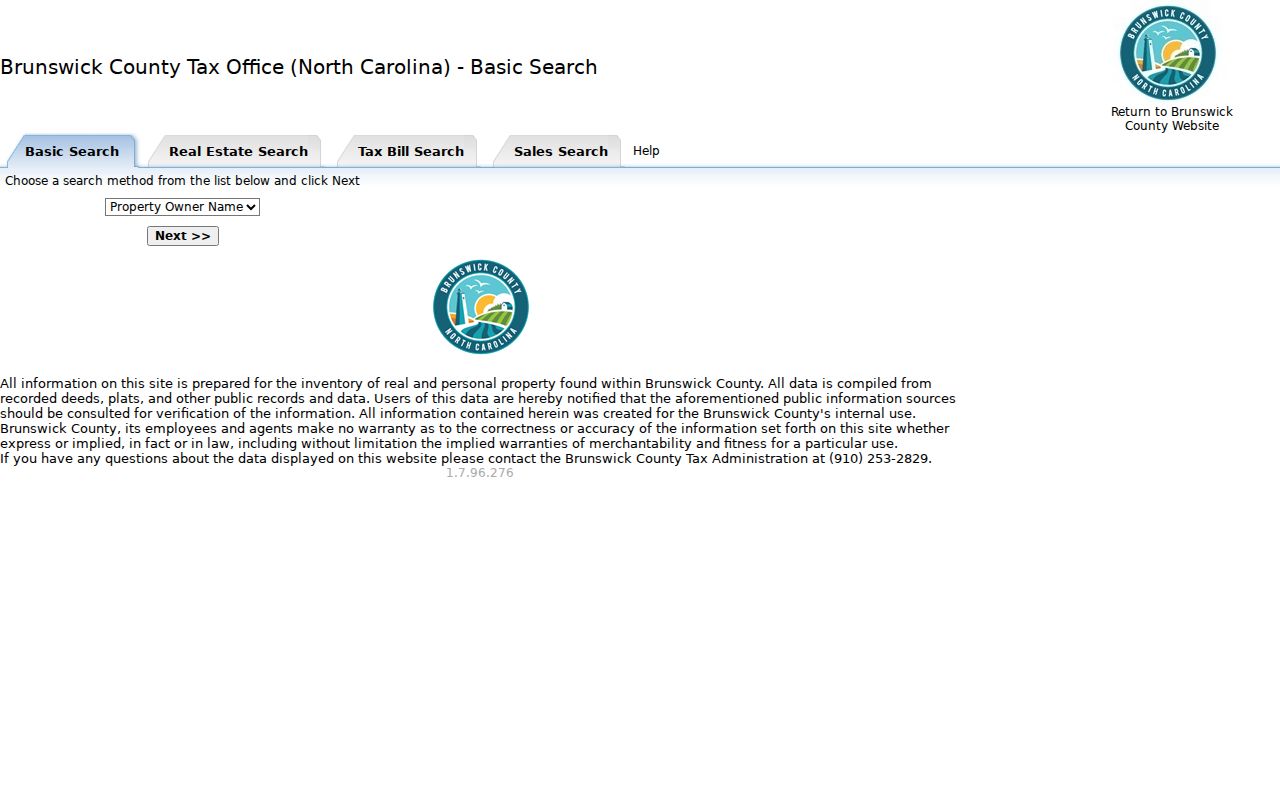
Use the returned parcel as a record key, then confirm a claimed ownership connection with the recorded instrument rather than a tax mailing address alone.
| Search field | Use in a Leland search |
|---|---|
| Owner | Finds a recorded ownership connection; test spelling variants. |
| Address | Uses the situs or property address with a normalized street suffix. |
| Parcel number | Bridges GIS, tax-card details, and legal-description research. |
| Card or map | Leads to parcel detail; confirm fields visible in the live result. |
The Brunswick County parcel-card entry point shows the companion property-record route.
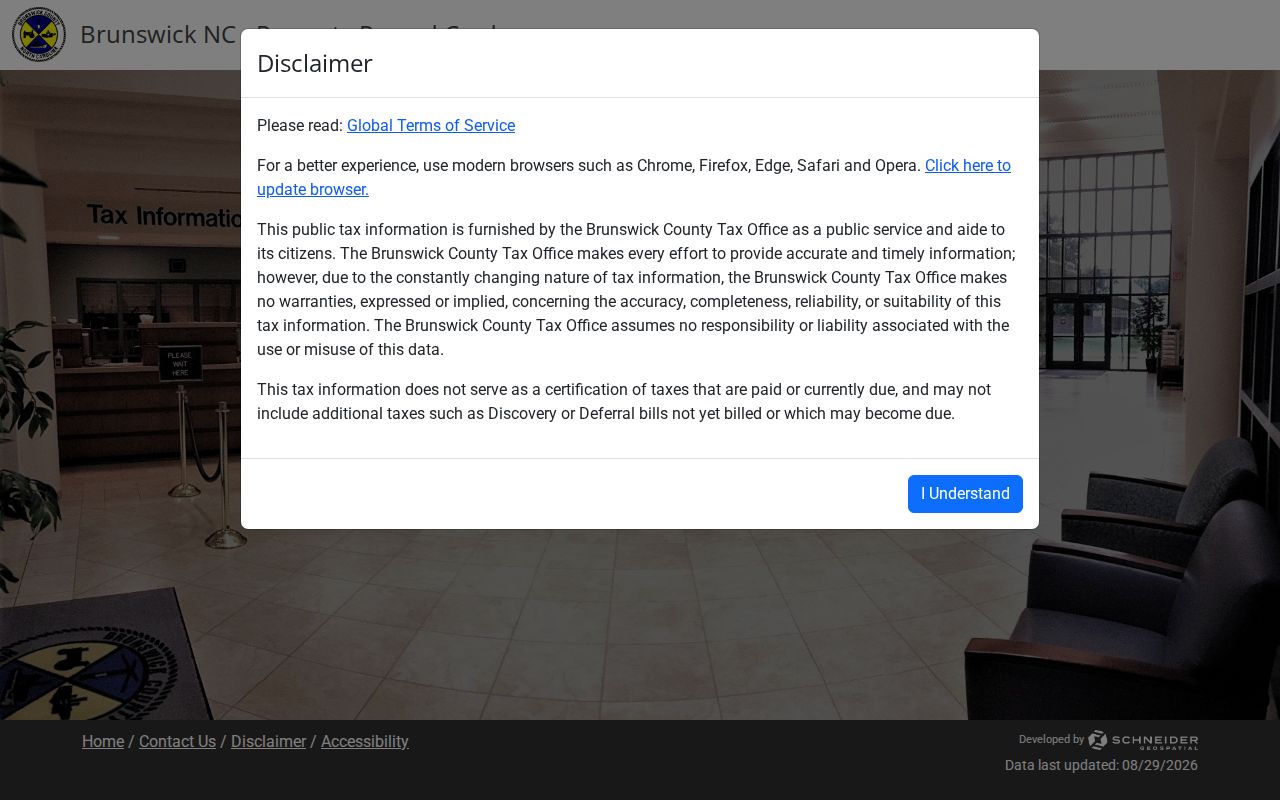
The parcel-card screen reinforces the same rule: use the parcel and legal description to connect records, and verify the visible fields before drawing a conclusion about an address.
Leland Voter Lookup by Name
The North Carolina State Board of Elections form is name-led, not a public street or ZIP roster. It requires first and last name fields and at least one voter-status choice. A middle initial, year of birth, and Brunswick County selection can narrow a common name. Public results can include registration status, precinct, jurisdictions, polling location, and participation history, subject to statutory redactions. Ballot choices are never part of a resident lookup. A removed or denied status also does not explain why a registration changed.
The official North Carolina voter lookup displays its first-name, middle-initial, last-name, birth-year, county, and status controls.
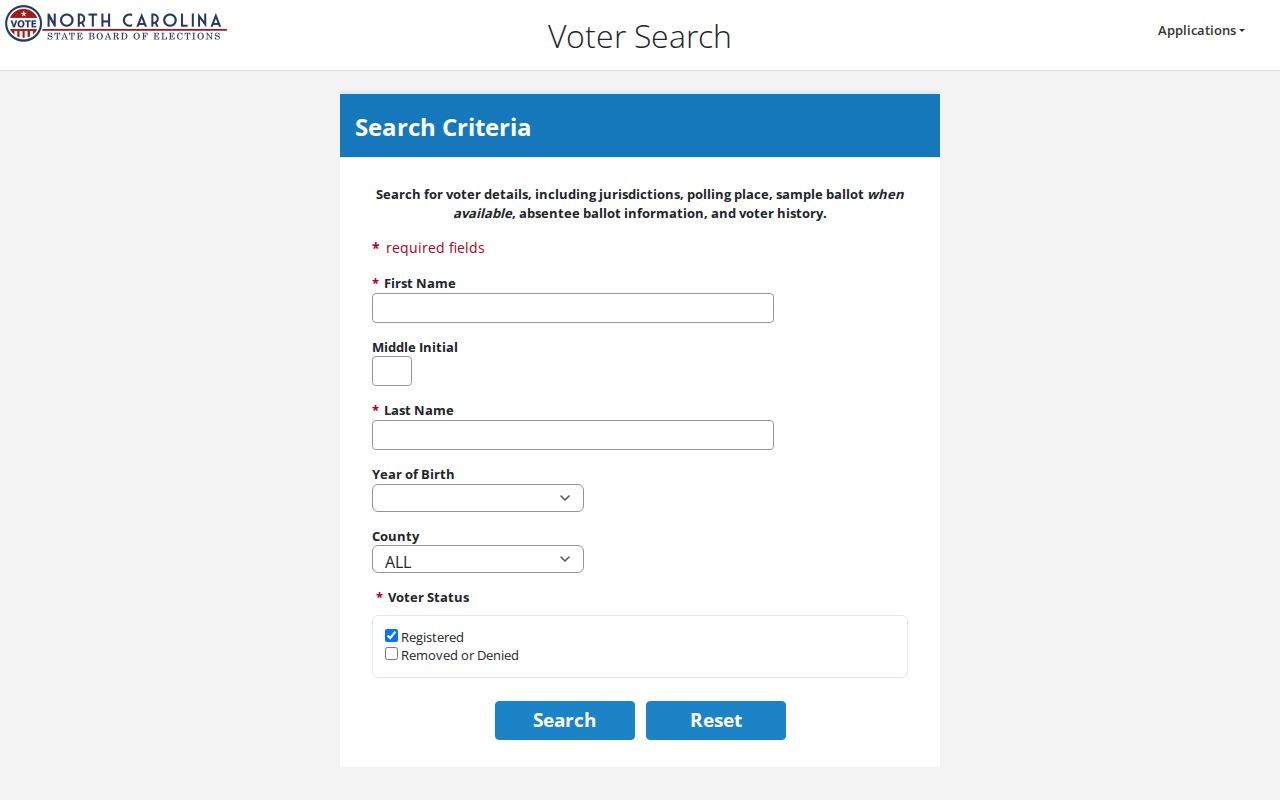
Compare a result with a date and another source. Full dates of birth, Social Security information, driver identification, protected addresses, and voter photographs are not ordinary public lookup fields.
Leland Deed Index Through Time
The Brunswick Register of Deeds gives the strongest Leland ownership trail. After accepting the portal notice, one criterion can be enough: grantor, grantee, document type, recording-date range, or book and page. The county states that online recordings run from September 1939 forward and that legacy grantor and grantee index PDFs cover 1932 through 1953. An older guide lists a 1764-1931 route, but current image access for that earliest period must be confirmed with the office.
Open the Combined Real Property/MAPS index to search the current owner as grantee, read a deed image, then search the seller as an earlier grantee. Book and page references can bridge a legacy index to an instrument.
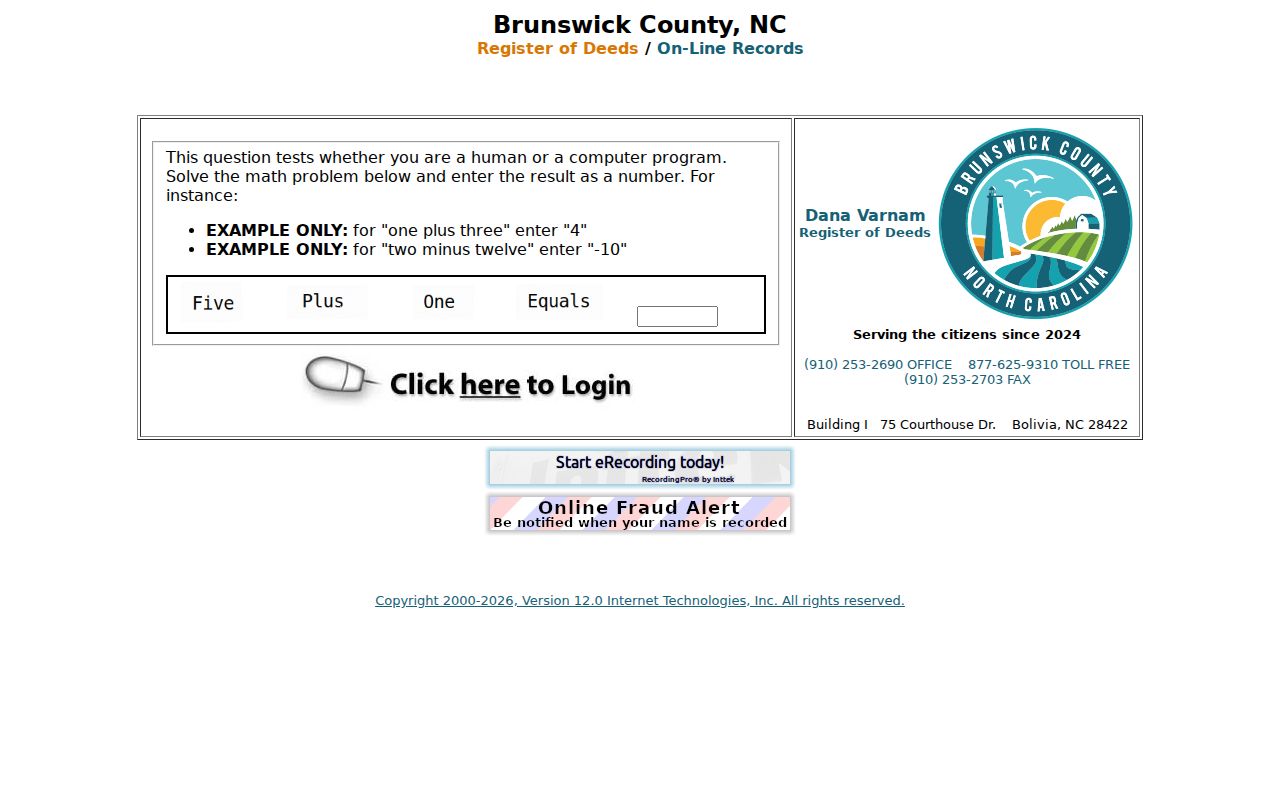
The portal is one access channel. The Bolivia counter and legacy books remain useful when a web date range or image ends.
Copies have separate routes. The county publishes an uncertified deed-copy price of 25 cents per page and directs written requests with payment to BCROD, PO Box 87, Bolivia, NC 28422. A certified deed or map copy is listed as $5 for the first page plus $2 per additional page. Those fees apply to a copy request, not to the free act of reading a portal index. Call the Register of Deeds before planning a trip for a legacy book, a map, or an eligible vital record because counter functions have distinct published hours.
Brunswick’s free recording Fraud Alert illustrates why name format matters. A first and last name with a middle initial can reduce noise, but a more exact middle-initial pattern can miss an expanded middle name.
Leland Court and Vital Checks
eCourts is useful for a public case or estate trail, while a vital certificate has a narrower, eligibility-based purpose. The statewide portal supports public case summaries by party name or case number, with advanced court-type, hearing, and judgment routes. It does not expose every document, and sealed, juvenile, adoption, protective-order, and other restricted matters may be absent. Brunswick converted to eCourts in February 2025; the Clerk in Bolivia remains the source for certified copies and older or restricted files.
A public case result can identify a case number, court location, party role, filing and hearing dates, events, disposition, or judgment data where permitted. It is not a certified file or a complete criminal-history report. The Clerk is at 310 Government Center Drive, Building S/Unit 1, Bolivia, and has separate civil, criminal, estates, and special-proceedings divisions. For a certified county name search, the Judicial Branch says the Clerk offers Form AOC-CR-314 and publishes a $25 fee. Court staff can explain a copy route but cannot turn a name match into an identity conclusion.
For a birth, death, marriage, or divorce certificate, use the NC Vital Records order routes or ask the Register of Deeds about an eligible county event. Holdings dates do not make every certificate open to every requester. G.S. 130A-93 and related rules govern access. North Carolina lists birth records from 1913, death records from 1930, marriage records from 1962, and divorce records from 1958, but the right to a certified copy still depends on the requester and record type.
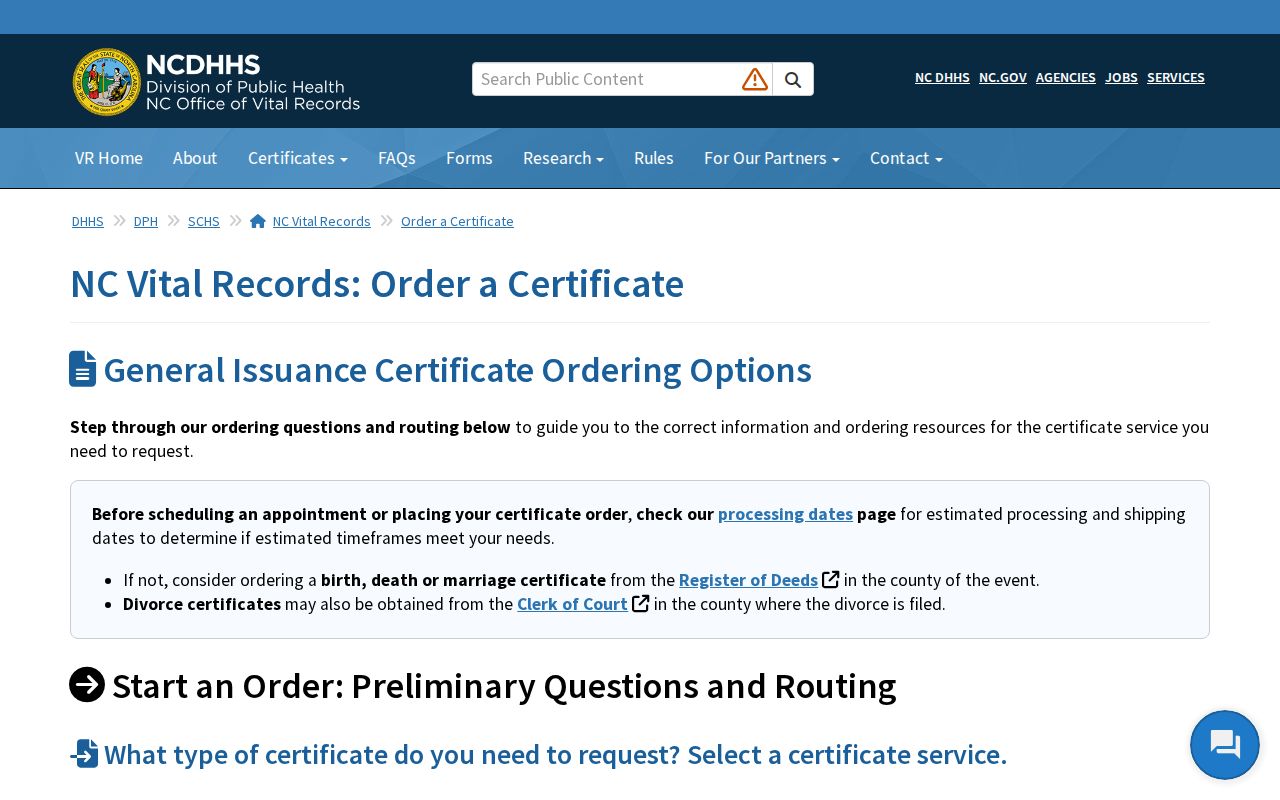
The order screen separates request routes by record type. New adoption orders follow the special NC Vital Records process, not the ordinary VitalChek path.
Current Leland Resident Sources
These records do not measure the same thing. A Leland residents directory search becomes more dependable when it preserves the difference between ownership, registration, a court or business filing, and a historical clue. The county has no one public household list, and a public source can be current for one purpose while stale for another.
| Source | What it can establish | Custodian | Access |
|---|---|---|---|
| Parcel and tax card | Owner, situs, mailing address, parcel, legal description | Tax Office | Portal and counter |
| Recorded deed | Grantor, grantee, date, book/page, legal description | Register of Deeds | Index, legacy books, counter |
| Voter record | Public status, address where available, precinct, history | NCSBE / Elections | Free named lookup |
| Town record | Existing meeting and municipal records | Town Clerk | Archive or focused request |
| Library material | Names, notices, and family-history clues | Library / Society | Database or desk |
- Parcel
- An administrative unit of land shown in tax and GIS systems.
- Situs address
- The land location, distinct from a tax mailing address.
- Index
- A finding tool that points to a record or image.
- Criss-cross directory
- An address-to-name directory, if a collection actually holds one.
Leland Geography Behind a Record
Postal, municipal, and county geographies overlap around Leland. Census evidence ties 28451 and 28479 fully or partly to the Leland place, while other ZIPs in county township material can serve nearby areas without putting each address in the town limits. The GIS viewer’s Postal Zones and Municipalities layers make that mismatch visible. USPS, not a place-name assumption, is the final delivery check for a complete address.
A ZIP is delivery geography, a parcel is an administrative land key, and a legal description is the recorded land description that may persist when an address changes. School, voter, fire, sanitary, flood, and zoning layers also describe geography, not household identity.
Historical Leland Resident Directories
Early Leland evidence often appears as a Brunswick County or post-office reference rather than a modern municipal address. The town was named in 1897, its post office opened in 1898, and incorporation followed in 1989. DigitalNC catalogs North Carolina city and business directory items for 1905 and 1906. The inspected 1906 volume places Leland among Brunswick County post offices and presents business, role, occupation, and community clues. It is not a complete household or reverse street directory.
The Leland city directories explain the collection, scan links, and limits of an old directory line. The Brunswick County Library also provides NewsBank, DigitalNC, HeritageQuest, Ancestry Library Edition, and Digital Sanborn access through different documented channels.
Leland Requests Beyond the Web
North Carolina Public Records Law, Chapter 132, opens existing public records subject to specific confidentiality statutes. G.S. 132-6 calls for inspection and copying at reasonable times and as promptly as possible, but it sets no universal numerical deadline and does not require an agency to create a new residents list. Identify the custodian, an existing record series, date range, person, address, parcel, or document number. Request electronic delivery when that will answer the question.
The Town Clerk’s public-record request instructions explain Leland’s route and the distinction between ordinary inspection, copies, and work involving extensive technology or clerical effort.
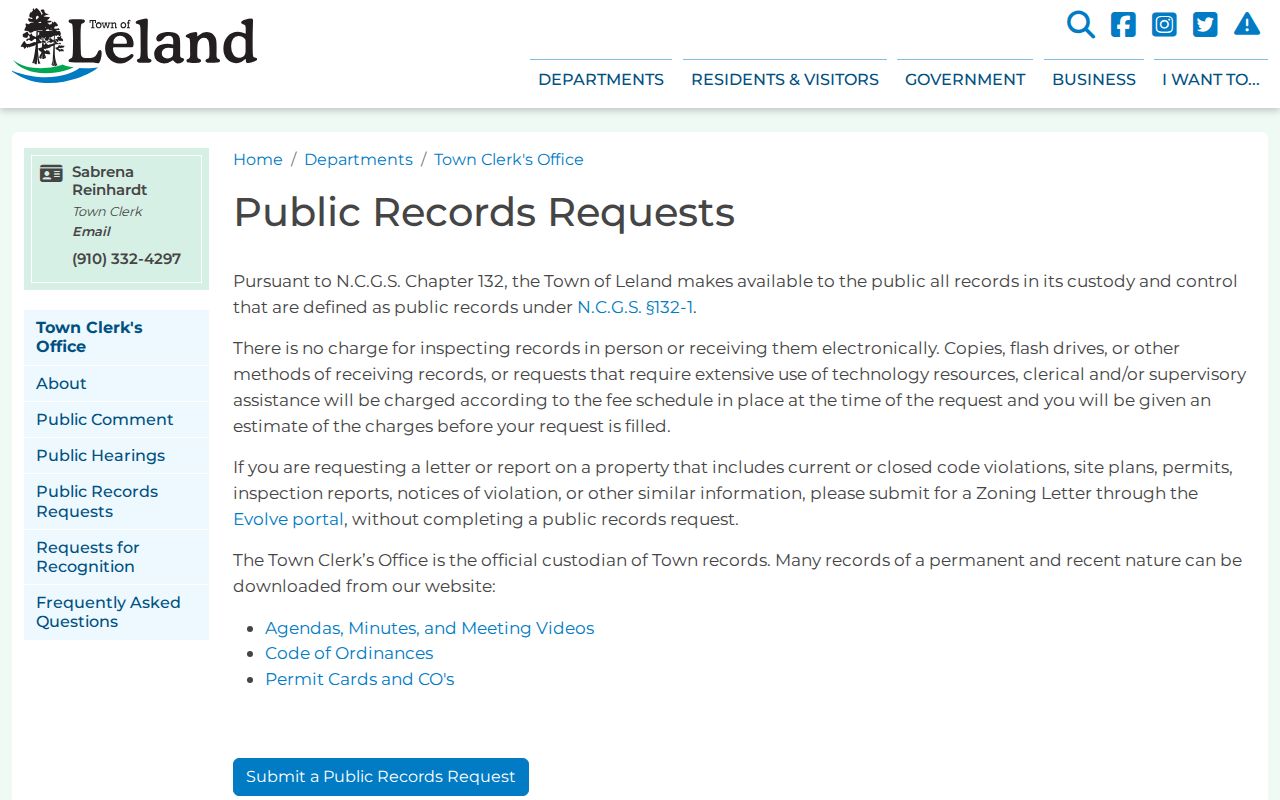
Town Hall has municipal material. County land, tax, election, and court questions belong with the responsible county office or Judicial Branch.
If no web portal answers the question, work through the documented alternatives rather than widening the search. The Register of Deeds and Tax Office have Bolivia counters and phone channels. The Clerk controls court copies. The Board of Elections can explain registration procedure and public-file limits. Brunswick County Library offers remote NewsBank with a card, in-library Ancestry Library Edition, HeritageQuest access, and reference help. The State Archives accepts specific-record copy requests, not an open-ended genealogy assignment. Each channel needs the narrow identifier that its staff can use.
Leland Privacy and Record Boundaries
Public access has real limits. The North Carolina Address Confidentiality Program can provide a substitute address for qualifying survivors. Voter protection rules withhold identifiers and protected addresses. DMV personal data is restricted under the Driver’s Privacy Protection Act. A missing result may be restricted, sealed, held by another custodian, or simply not indexed by the search method used. Treat an absence as an access question, not proof that a person has no record.
Lawful use. Public Leland records support personal, family-history, civic, and property research, but they do not permit stalking, harassment, threats, or efforts to expose protected information.
Brunswick’s redaction procedure addresses specified personal identifiers in Internet images. It does not remove a whole deed history. For a safety-related address concern, use the ACP’s official route rather than trying to reconstruct an address from other records.
Leland Family and Community Trails
Some questions are better answered by history collections than by a current roll. A probate file can supply an executor or public filing trail; a Brunswick Beacon notice can offer a date and family clue; and the Historical Society reports Bible, church, cemetery, map, deed, tax, court, and oral-history materials. A former classmate search should begin with a school year, newspaper notice, or yearbook clue and then seek careful corroboration. Adoption and birth-family questions have an official confidential route through the Clerk, Department of Social Services, and NC Vital Records.
The official NCCash search is another state name search, but it is for unclaimed-property claims rather than a Leland household list.
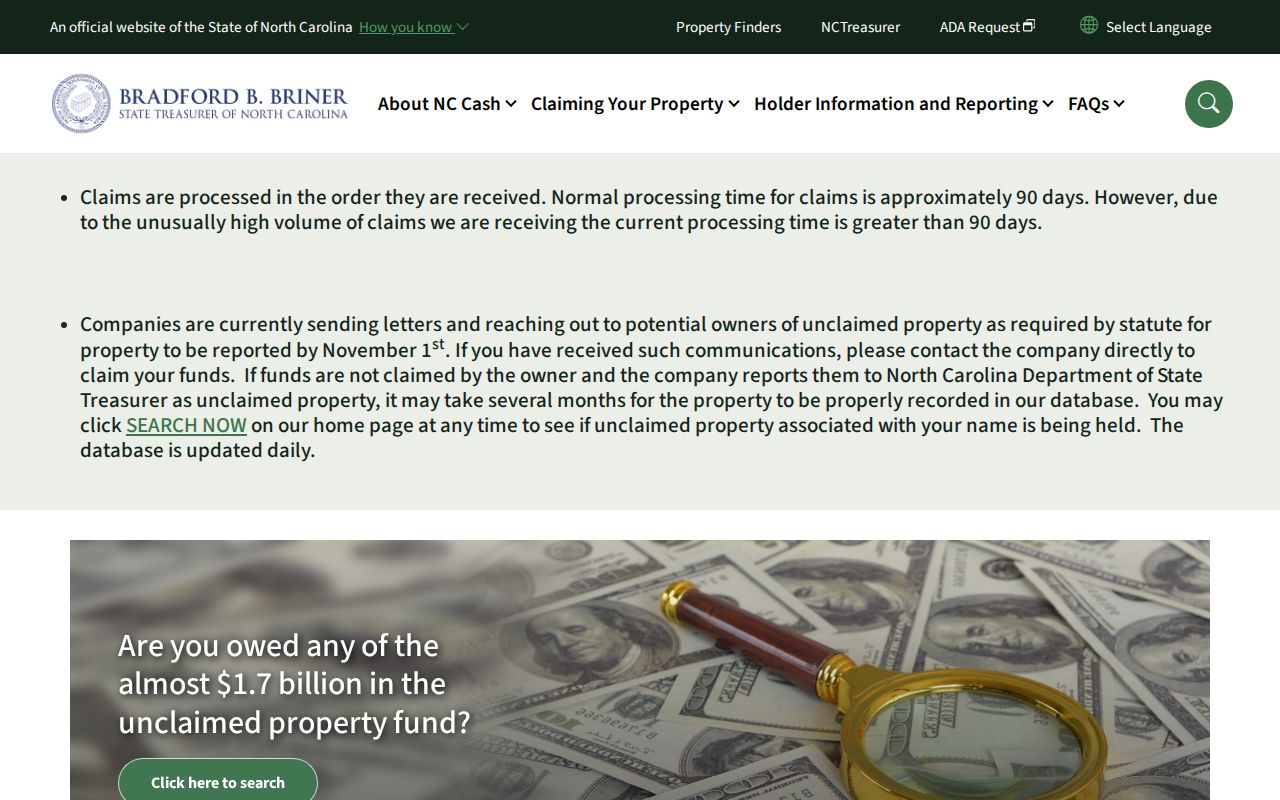
Keep the source and date for any lead, then let the responsible custodian validate an ownership or claim question.
Leland Records Changes in 2026
Recent updates change where a search starts, not what a record proves. North Carolina completed statewide eCourts implementation in October 2025. In August 2026, Leland launched a Transparency Portal with charts and staff-report context that can identify a department or date before a focused request. The FY 2026 Brunswick County budget also identifies Register of Deeds technology work aimed at older real-estate indexing, computerization, and preservation. Those goals do not mean every early book is online.
When a search stops, retain the parcel, book/page, case number, or catalog reference. That detail makes a counter, phone, mail, library, or State Archives follow-up more productive.